We can diagnose and rectify most causes of dampness that may be affecting your home and are able to offer 20 year insurance backed guarantees for some types of work we undertake. If you’ve got issues with damp in your property please read the following before assuming its going to cost the world. We’re more than happy to give advise and potential solutions for some issues free of charge.
There are three main causes of dampness that can affect your home, all of which need to be treated in different ways. Depending on the cause of the dampness and the size of the area affected this can be quite costly to rectify however the most common form of damp can usually be rectified with little or no financial outlay.The three main causes of dampness that can affect your property are as follows:
Believe it or not condensation is the most common cause of dampness that affects UK homes and can in many cases be the easiest to prevent.
What exactly is condensation?
Condensation is caused when warm damp air comes into contact with a cold surface, such as external walls, or windows. When moisture laden air touches these much colder surfaces the invisible water vapor that’s usually suspended in the air “Condenses” to form liquid water droplets. Warm air by its very nature is able to hold more water vapour than cooler air so in rooms such as the bathroom or kitchen this warm air is usually of a very high humidity. This is why it is common to see any cold surfaces within these rooms to be soaked in condensation and although this is usually a winter problem, condensation can occur at any time. Unfortunately to make matters worse condensation issues are more common today than ever due to our highly insulated homes which are designed to trap warm air inside with little or no ventilation. Central heating, double glazed windows, cavity wall insulation and blocked up vents (Air bricks) can all add to the problem. The condensation forms but due to the lack of ventilation cannot evaporate again causing unsightly mould and rot. This not only damages decorative surfaces, furniture and appliances but can also cause serious health issues, especially to young children and the elderley.
What’s the solution?
Obviously it is desirable to keep our houses warm, especially in winter however good ventilation is the key to helping eliminate condensation. Simple solutions such as opening windows and ensuring extractor fans are fitted and working can help tremendously however with more persistent and severe problems the installation of a PIV (Positive input ventilation) unit to the loft space can provide a more practical solution. In many cases we can supply and fit these units for well within expected budgets and many of our customers have found this to be a very cost effective solution to the problem.
Rising damp:
What is rising damp. Rising damp occurs when groundwater is drawn up through porous building materials such as brick, sandstone or mortar. When water comes into contact with porous materials the water is drawn up by means of capillary action, similar to the way water travels up through a sponge or oil travels up through a lamp wick. Problems with rising damp usually occur when the damp proof course (DPC) that is usually installed at the time of construction fails and allows moisture to rise above floor level. In other instances the damp course may be in tact but has been breached due to back filled soil or other objects that may be in contact with the wall.
What are the signs:
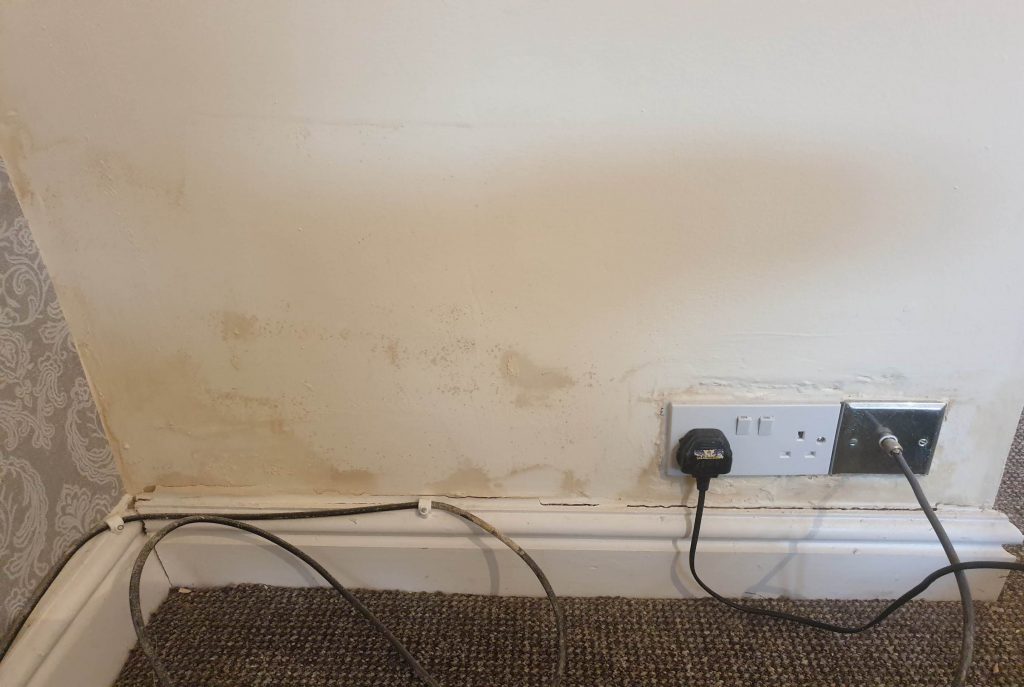
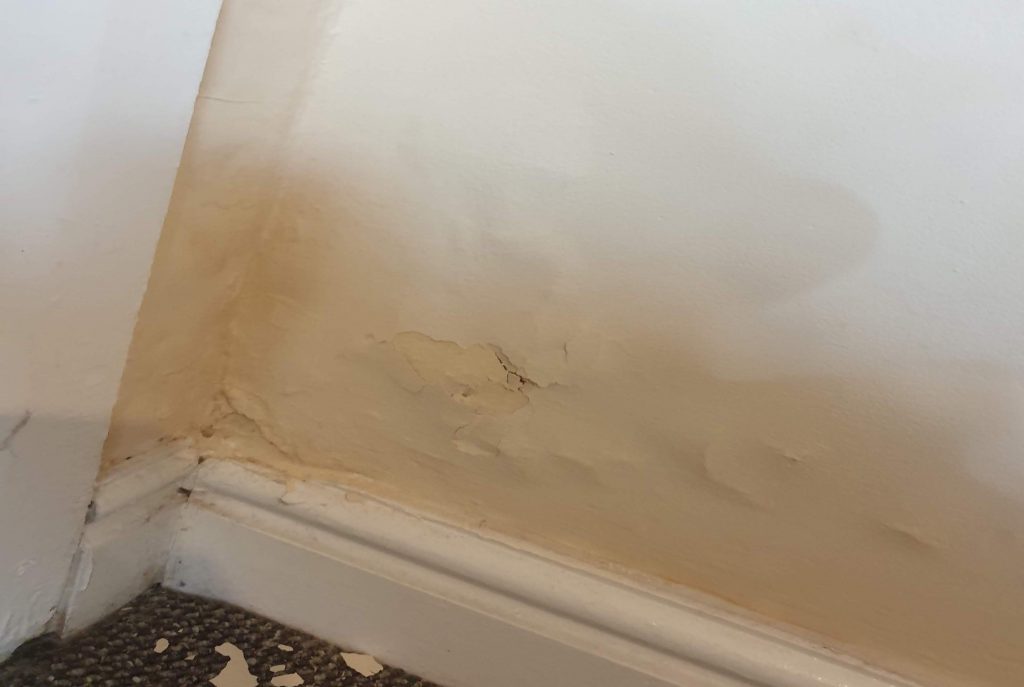
Flaking, paint and plaster and stains on the ground floor walls can all be signs of rising damp issues. Usually these visible signs do not extend any higher than about one meter from ground level however rising damp can sometimes be accompanied by other damp issues so it’s important to get a professional to diagnose this properly.
What is the solution:
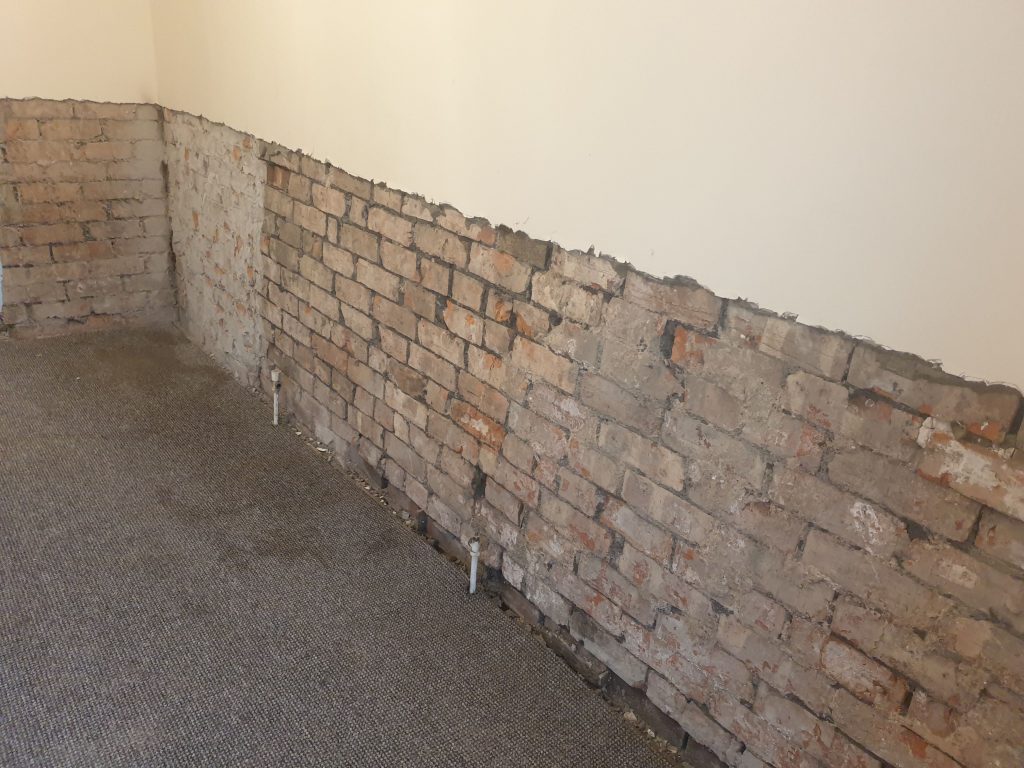
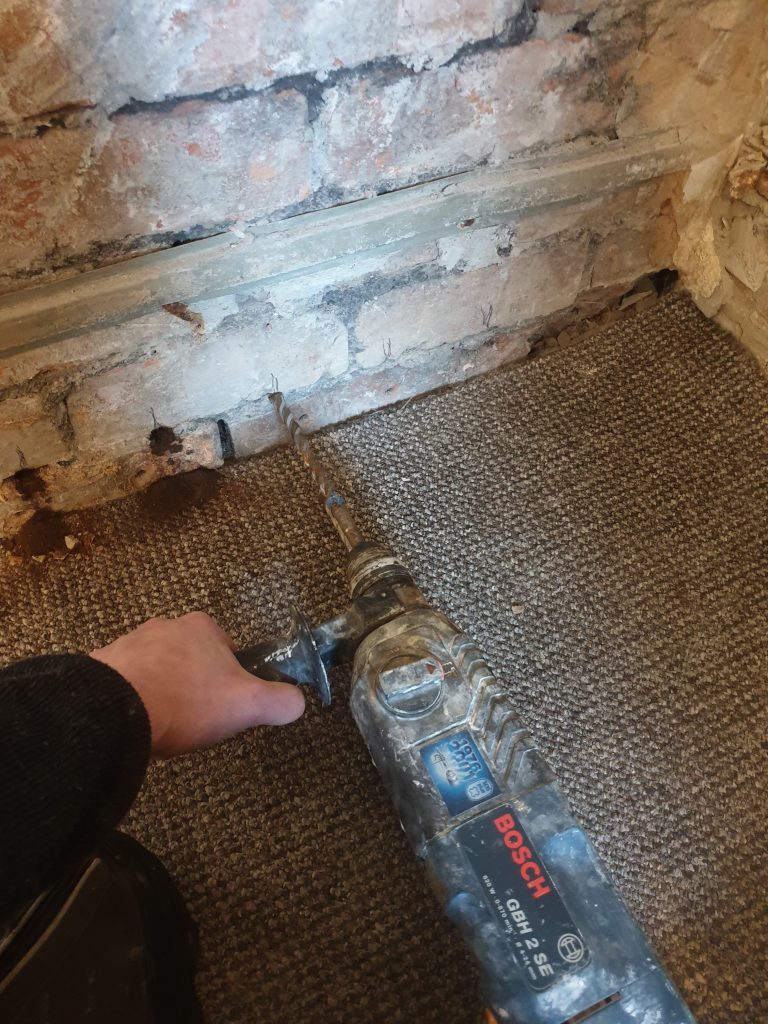
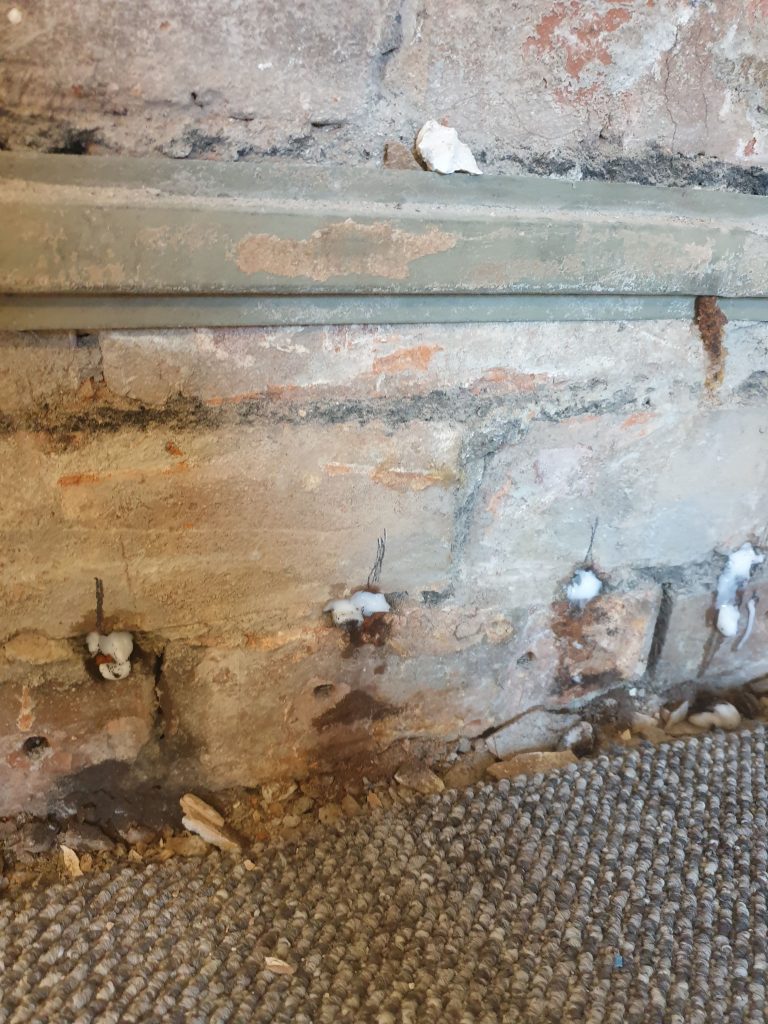
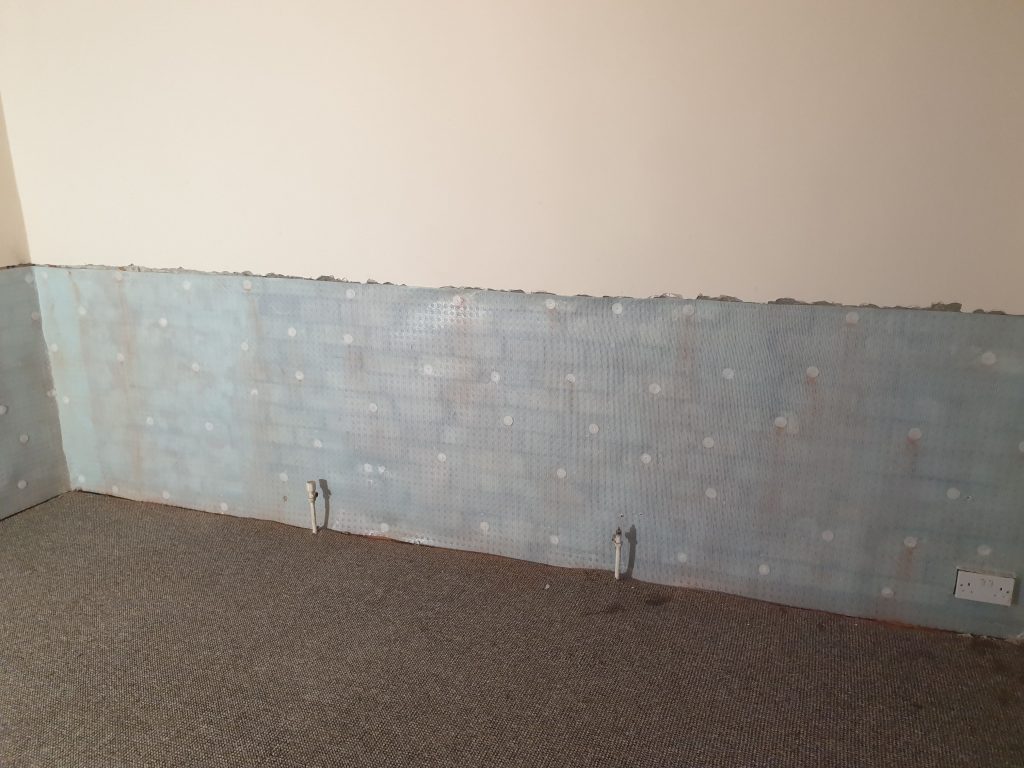
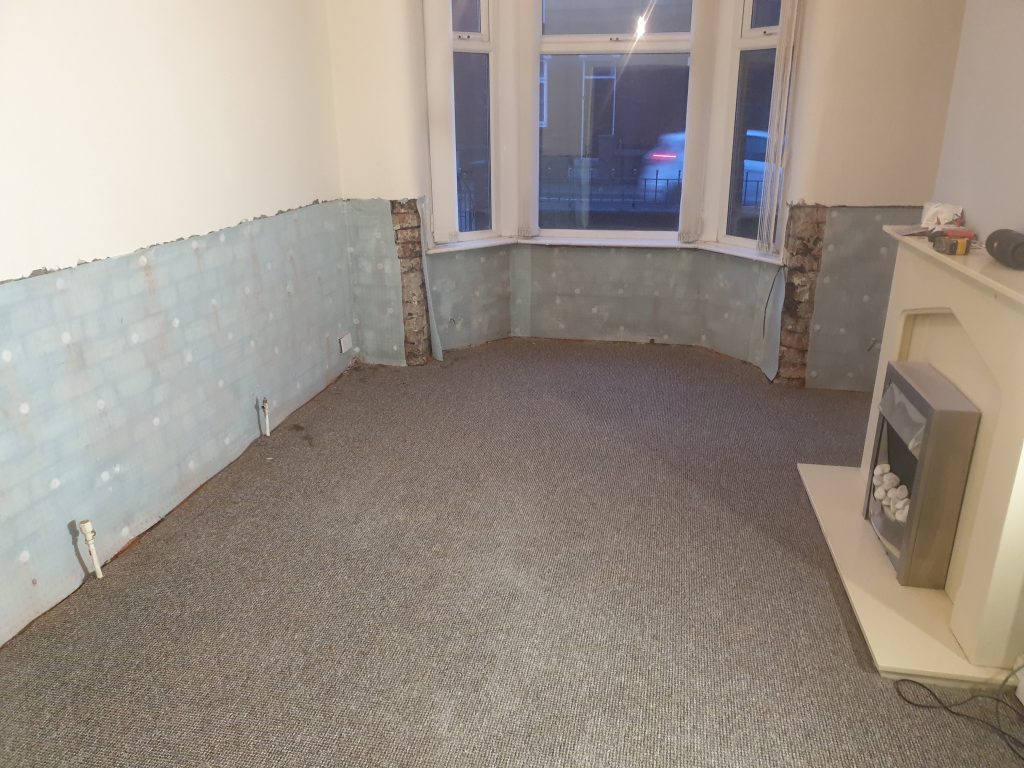
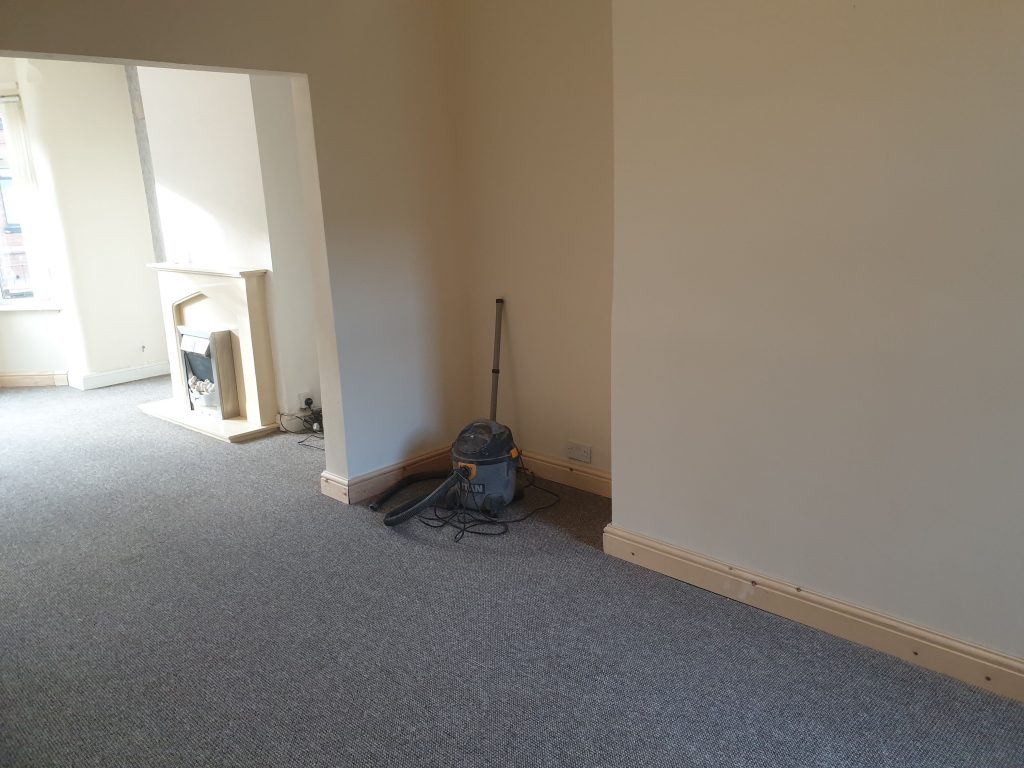
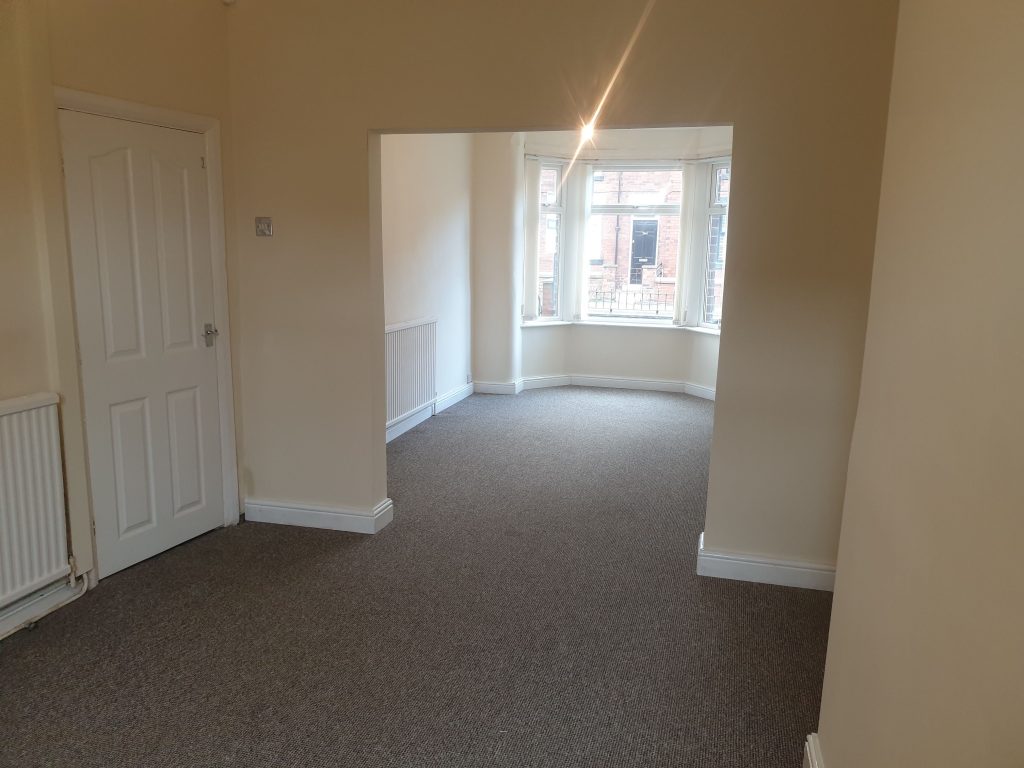
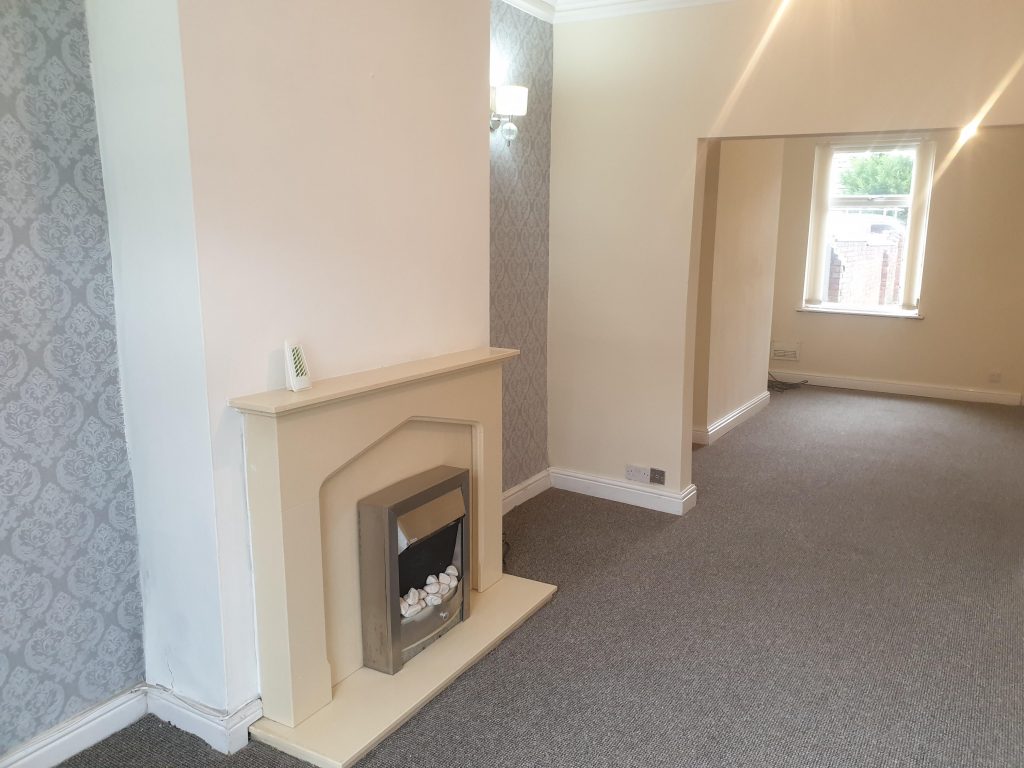
There are numerous ways to tackle rising damp issues and the best solution can vary depending on the severity of the damp and the size of the area affected. ( Click here for case study )The images below show how we resolved a severe rising damp problem that had been affecting the entire ground floor of a Victorian terraced house in Wigan. The landlord was unable to rent the property due to the severity of the problem so we were contracted to do the work whilst the property was empty.
In this instance we were able to resolve the problem and provide 20 year insurance backed guarantees to cover the work undertaken.
Penetrating damp:
Penetrating damp usually occurs when rainwater is able to penetrate through the masonry resulting in visible dampness to internal surfaces. There are numerous reasons why this may happen such as blocked gutters and downpipes, roof issues, poorly maintained pointing and even badly installed wall ties. It is worth noting however that penetrating damp can also be caused by faulty plumbing which can often be buried inside walls making it very difficult to pinpoint.
What is the solution:
The first thing to do is to check for obvious causes in the area affected.
One of the most common causes of penetrating dampness is inadequate or blocked guttering. Guttering issues allow rainwater to run down the external face of the brickwork and eventually soak through to internal surfaces and in instances such as this it’s not uncommon to see ‘green growth’ on the external brickwork. If however the problem cannot be easily identified then it’s always best to have a professional assess the problem in more depth.
Case Study:
Warrington Road, Abram, Wigan
Several rooms in the ground floor of this victorian terraced property were showing signs of dampness including staining and flaking paint and plaster.
Having concluded that the DPC had been compromised in numerous areas we were contracted to undertake major remedial works including mortar bed injections and installation of a mesh membrane tanking system.
Once the remedial works were complete we were able to re-plaster, fit new skirting boards, decorate and provide a 20 year insurance backed guarantee.